
Every month, the menstrual cycle restarts, accompanied by its symptoms and side effects. How do you experience your female cycle?
Unfortunately, some questions remain taboo, even though they might encourage us to seek answers about menstruation.
What exactly are menstrual cycles? What is their duration? What are its phases? It’s never too late to learn and understand what’s happening within your body.
Summary:
- What is a menstrual cycle?
- What is the duration of a menstrual cycle?
- What hormones are involved in the female cycle?
- What are the different phases of a menstrual cycle?
What is a menstrual cycle?
The menstrual cycle is a natural process that repeats every month in women’s bodies, from puberty to menopause, with the main goal of preparing the body for a possible pregnancy. This is why the body undergoes several changes and hormonal fluctuations. It is divided into four phases: menstruation, the follicular phase, ovulation, and finally, the luteal phase, all of which are regulated by hormones.
What is the duration of a menstrual cycle?
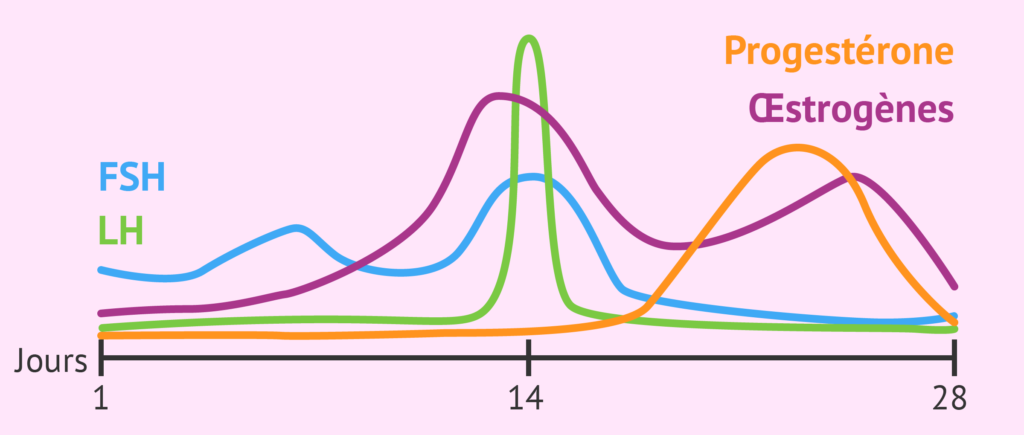
The menstrual cycle is generally estimated at 28 days, but in reality, it can vary from 21 to 45 days depending on the woman. Additionally, the duration and regularity of cycles can change throughout a woman’s life.
Because each woman is unique and the length of cycles can evolve over time, it is helpful to calculate the length of your menstrual cycles to better understand your body. Two methods can be used to calculate your cycle:
- Calendar method: Note the first day of your period and count the days until the start of your next cycle. It is important to repeat this calculation for at least three cycles, as variations from month to month are common.
- Symptom-based method: Pay attention to premenstrual syndrome (PMS) symptoms, such as decreased energy, increased fatigue, abdominal pain, headaches, or mood swings, which can indicate the approach of your period.
Learning to better understand your cycle will help you better understand yourself and feel more in tune with your body.
What hormones are involved in the female cycle?
The menstrual cycle in women is mainly regulated by four hormones:
- Follicle-stimulating hormone (FSH): Produced by the pituitary gland (located in the brain), it plays a crucial role in stimulating the growth of eggs in the ovarian follicles during the menstrual cycle.
- Luteinizing hormone (LH): Also produced by the pituitary gland, this hormone triggers the release of eggs during the menstrual cycle.
- Estrogens: These are hormones primarily produced by the ovaries. In the menstrual cycle, they regulate the development of ovarian follicles and the uterine lining (endometrium) in preparation for the possible implantation of a fertilized egg.
- Progesterone: Produced in large quantities by the corpus luteum, a structure that forms in the ovary after ovulation. In the menstrual cycle, its role is to prepare the endometrium for the potential implantation and maintenance of a pregnancy. If fertilization does not occur, the corpus luteum disappears, leading to a drop in progesterone levels and the onset of menstruation.
Variations in hormone levels can lead to menstrual irregularities or other health issues.
What are the different phases of a menstrual cycle?
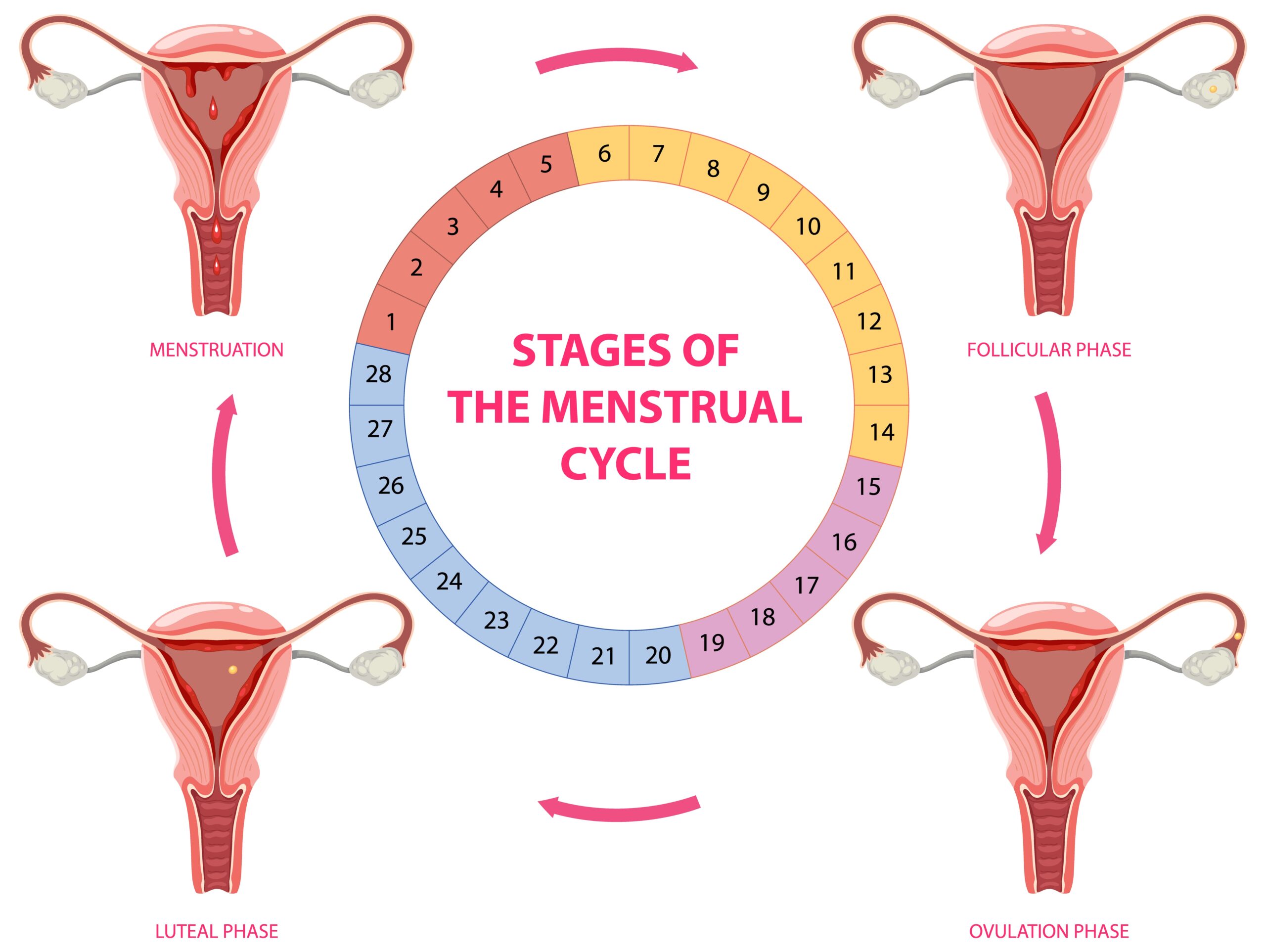
The menstrual cycle is divided into four phases:
- Menstrual phase:
The first phase of the cycle is the menstrual phase, also called menstruation or period.
At the hormonal level, this phase coincides with low levels of estrogen and progesterone. This is the phase during which the body expels both the unfertilized egg and the endometrium in the form of blood and clots. In addition to blood loss, various symptoms can affect women during their period, making this time difficult: abdominal and back pain, headache, fatigue, bloating…
The duration of the period varies from one woman to another: some report having a two-day period, while others have more than seven days of bleeding.
- Follicular phase:
During this phase, estrogen levels rise, stimulating the development of ovarian follicles. One of these follicles becomes dominant and continues to grow while producing more and more estrogen, while the uterus gradually prepares to welcome a fertilized egg.
It is often the phase where women feel the most energetic and experience fewer symptoms related to premenstrual syndrome (PMS).
- Ovulation:
Ovulation occurs around the middle of the menstrual cycle. It is the shortest phase, during which a mature egg is released from the ovarian follicles under the influence of rising luteinizing hormone (LH) levels.
The release of the egg can sometimes cause cramps and lower abdominal pain.
- Luteal phase:
The luteal phase is the longest phase of the menstrual cycle, lasting almost half the cycle. After ovulation, the empty ovarian follicle turns into a structure called the corpus luteum. The corpus luteum produces progesterone, which prepares the body for the potential implantation of the fertilized egg by increasing the thickness of the endometrium. If fertilization does not occur, the corpus luteum degenerates, and the body expels the unfertilized egg and the built-up endometrium, triggering the start of a new menstrual cycle.
The luteal phase is also known as the premenstrual syndrome (PMS) phase, during which women may experience various symptoms, such as mood swings, depression, painful cramps, acne, water retention, migraines, and fatigue.
If you experience menstrual pain and PMS, discover our products to help you better live through your cycle.